
I’ve been in the SEO trenches for over three years now, working with brands that most people would call “big industry giants,” and if there’s one question I get asked more than any other right now, it’s this: “Is SEO even a real career anymore, or is AI about to wipe it out?”
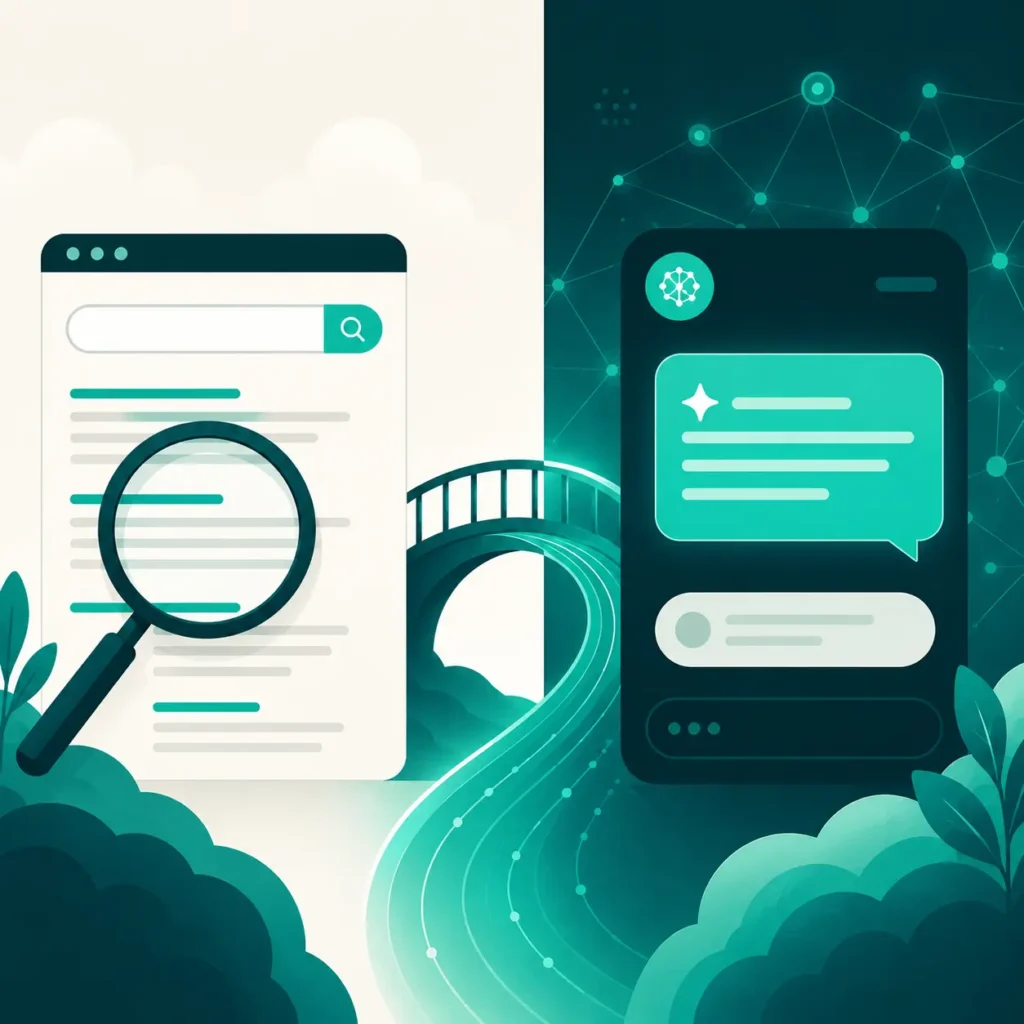
Here’s my honest, experience-backed answer: SEO isn’t dying, it’s splitting into something bigger. Based on what I’ve seen firsthand and what the data confirms, AI hasn’t killed SEO careers. It’s upgraded them. The job used to be about ranking blue links on a results page. Now it’s about owning answers, inside Google’s AI Overviews, inside ChatGPT, inside Gemini, inside Perplexity. That shift is exactly why terms like AI SEO, AEO (Answer Engine Optimization), and GEO (Generative Engine Optimization) have become part of our everyday vocabulary in the last year or two. If you’re new to these terms altogether, I’d recommend starting with my beginner’s guide to SEO and AI SEO in 2026 before diving into the career side of things here.
And I don’t say this lightly, I’ve watched this shift happen in real client accounts. Decision-makers are already treating AI visibility as a real KPI: one industry survey of 200+ senior SEO specialists found that 91% said clients or leaders had asked about AI search visibility in the last year (source: State of AI Search Optimization survey, SEOFOMO). Another benchmark report found that brands appearing in AI answer engines see roughly 2.3 4.8× higher trust and click-through compared with brands that only rank in traditional SERPs (sources: SEOFOMO survey, EWR Digital, AI SEO statistics), that’s not a small edge, that’s the difference between being an afterthought and being the default recommendation.
Why Is SEO Still a Future-Proof Career in an AI-First Search World?
I’ll be direct: SEO is still one of the most future-proof careers in digital marketing, and the reason is simple – someone still has to make brands visible, and AI hasn’t removed that need, it’s just changed where visibility happens.
What Makes SEO a High-Impact, Future-Proof Career Path Today?
From where I sit, SEO now lives at the intersection of technical execution, content strategy, and business growth and that intersection is exactly what makes it hard to automate away. CXL’s SEO Career Guide backs this up, noting that SEO drives brand awareness, qualified traffic, and pipeline growth across SaaS, ecommerce, and B2B alike (source: CXL SEO Career Guide).
I’ve also noticed the demand isn’t just for entry-level execution – it’s for people who can climb. CXL maps out a clear progression: Junior → Specialist → Manager → Head of SEO → Director of Organic Growth → VP/CMO with SEO focus (source: CXL SEO Career Guide). That’s a real career ladder, not a dead-end job. It’s actually the same ladder I built my SEO Academy mentorship framework around, because I wanted learners to see the whole path, not just the entry point.
How Are AI SEO, AEO, and GEO Changing the Definition of "Visibility"?
This is the part I find most exciting, honestly. We’ve moved from “ranking blue links” to “owning answers across search engines and LLMs.” AI search now rewards structured, authoritative, answer-ready content ecosystems – not just keyword-stuffed pages (sources: CXL SEO Career Guide, Seoways: SEO Careers in Demand for 2025). And here’s something I always tell newer SEOs I mentor: AI SEO/GEO isn’t a replacement career, it’s a specialization layer sitting on top of classic SEO. You still need the foundation.
AI Visibility
Numbers talk, so let’s look at them. Based on CXL’s benchmarks (source: CXL SEO Career Guide), here’s how the SEO career ladder pays (salary chart shown above in our working thread – carries over into the final HTML build).
In my experience, the timeline behind these numbers matches what CXL reports too: entry-level to manager typically takes 2–4 years, while leadership roles usually take 6–10 years, and only for people who deliberately build skills and show proven pipeline impact (source: CXL SEO Career Guide).
Why Are Experienced SEOs in Short Supply Yet in High Demand?
Here’s something I’ve lived through personally: the entry-level market is brutally competitive, but experienced talent is genuinely scarce. Macnaught Digital points out that junior roles can pull in 200+ applications, while the industry simultaneously struggles to find seasoned practitioners (source: Macnaught Digital, How to Get Started in SEO). Add AI disruption into the mix, and teams now need SEOs who can adapt to AI search and answer engines while still proving ROI — which makes genuinely skilled people even more valuable than before (sources: CXL SEO Career Guide, Seoways: SEO Careers in Demand for 2025).
Which SEO and AI SEO Skills Matter Most for Career Growth in the AI Era?
This is the question I get asked in almost every mentorship call I do now: “What should I actually be learning?” And honestly, my answer hasn’t changed much – you still need the fundamentals rock solid, then you layer AI-specific skills on top.
What Core SEO Skill Pillars Should Every Professional Build First?
CXL breaks this down into six pillars (source: CXL SEO Career Guide), and from my own experience building out intern training programs, I’d say this list is spot on:
- AI SEO (AEO/GEO) – structuring content for answer engines and generative AI retrieval
- Keyword research & content strategy – content mapping, editorial systems, compounding growth
- On-page & programmatic SEO – aligning content to search intent at scale
- Link building & authority – securing trust and credibility
- Growth-focused SEO testing – experimentation, validation, reporting
- Technical SEO – architecture, crawlability, scalability
I’ve built entire training tracks around these exact pillars for the interns I manage, and the ones who master all six – not just their favorite one or two – are the ones who end up leading projects fastest.
Which AI-Specific SEO and GEO Skills Are Becoming Essential?
Here’s where things get interesting, and where I think a lot of “old school” SEOs are falling behind if they’re not paying attention. The AI-specific skill set now includes (sources: CXL, AI in B2B Marketing, HubSpot: How AI Is Impacting SEO):
- Optimizing for AI Overviews and LLM retrieval (ChatGPT, Gemini, Perplexity)
- Entity-centric optimization — schema, structured data, topical authority, comparison content
- Building answer-ready pages and citable comparison content that LLMs actually prefer to pull from
- Off-page GEO tactics specifically aimed at closing AI citation gaps
In my own work, entity-centric optimization has been the biggest shift. It’s no longer just “does this page rank” – it’s “does this page get cited as the answer.”
What Skills Belong on a Modern SEO and AI SEO CV?
If I were reviewing CVs today (and I do, regularly, for my intern program), here’s what I’d want to see, straight from CXL’s list of skills that belong on a modern SEO CV (source: CXL SEO Career Guide):
- Technical SEO & scalable architecture
- On-page & programmatic SEO execution
- Link building & authority growth
- Funnel-focused keyword research & content strategy
- Bottom-of-funnel SEO conversions
- Growth-focused testing & reporting
- AI SEO (AEO/GEO)
- Cross-functional collaboration with content/product
- Executive reporting tied to pipeline impact – think “Increased organic SQL pipeline by 30%,” not just “improved rankings”
That last point is something I stress constantly with my own team, and it’s a core part of how I evaluate results in my success stories too – rankings don’t pay the bills, pipeline does.
How Do AI, AEO, and GEO Change Metrics and What SEOs Must Prove?
This is probably the biggest mindset shift I’ve had to make personally over the last couple of years. We’ve moved away from vanity metrics – rankings, raw traffic – toward metrics that actually tie to revenue: pipeline, SQLs, and now, AI visibility (source: CXL FAQ: mistakes holding SEOs back) (comparison visual shown above in our working thread).
Hiring managers I’ve spoken with – and CXL’s research backs this up – increasingly want evidence of pipeline impact, not just a screenshot of rankings (source: CXL SEO Career Guide). In an AI-driven environment, that line between “SEO work” and “revenue growth” needs to be crystal clear, or you’ll get passed over for someone who can draw that line.
Success is no longer measured by rankings alone - AI-era SEO ties directly to citations, AI-driven traffic, and revenue.
Traditional Focus
AI-Era Focus
Beyond CXL’s framework, the wider data supports this same shift toward AI-era KPIs. AI adoption has surged fast: one 2026 report found 91% of marketers are now using AI, with nearly half (47%) using it mainly for text-based content creation (source: SEOprofy: AI SEO Statistics). AI-generated answers are estimated to threaten up to 50% of traditional search traffic (sources: Elementor: AI SEO Statistics, SEOprofy: AI SEO Statistics), and visitors coming from AI search surfaces can be 4.4× more valuable by conversion rate than average organic visitors (source: SEOprofy: AI SEO Statistics). One 2025 agency benchmark reported that 78% of marketing teams increased budget for AI-driven SEO, and 41% of CMOs plan to replace parts of traditional SEO with AI-led operations (source: EWR Digital: AI SEO Statistics), which is exactly the kind of budget shift creating demand for roles that blend SEO and AI skills.
How Can Beginners Start and Progress in an SEO Career in the AI Search Era?
If you’re just starting out, this is probably the most practical section for you and honestly, if you haven’t already, go read my beginner guide to SEO and AI SEO alongside this one, since it covers the foundational side in more depth.
How Should a Beginner Pivot into SEO and AI SEO Without Formal Training?
Here’s something that surprised me when I first got into this industry: most SEOs, myself included in a sense, didn’t come from a formal academic path. Macnaught Digital confirms this too – most SEOs stumbled in and progressed quickly once they were actually inside the industry, learning by doing (source: Macnaught Digital, How to Get Started in SEO).
If I were starting fresh today, I’d follow the same advice CXL gives in their FAQ: start with foundational courses covering on-page SEO, link building, and keyword research, and focus on showing measurable impact on traffic or pipeline as early as possible (source: CXL SEO Career Guide, FAQ). Don’t skip the theory either – free resources like the Moz Beginner’s Guide to SEO and Google’s Search Essentials are still the best baseline for understanding how search actually works before you touch a single client site (source: Macnaught Digital).
Why Is Launching Your Own Website or Side Project Critical for Entry-Level SEO?
This is the one piece of advice I give every single person who asks me how to break into SEO: build your own site. Not eventually – now.
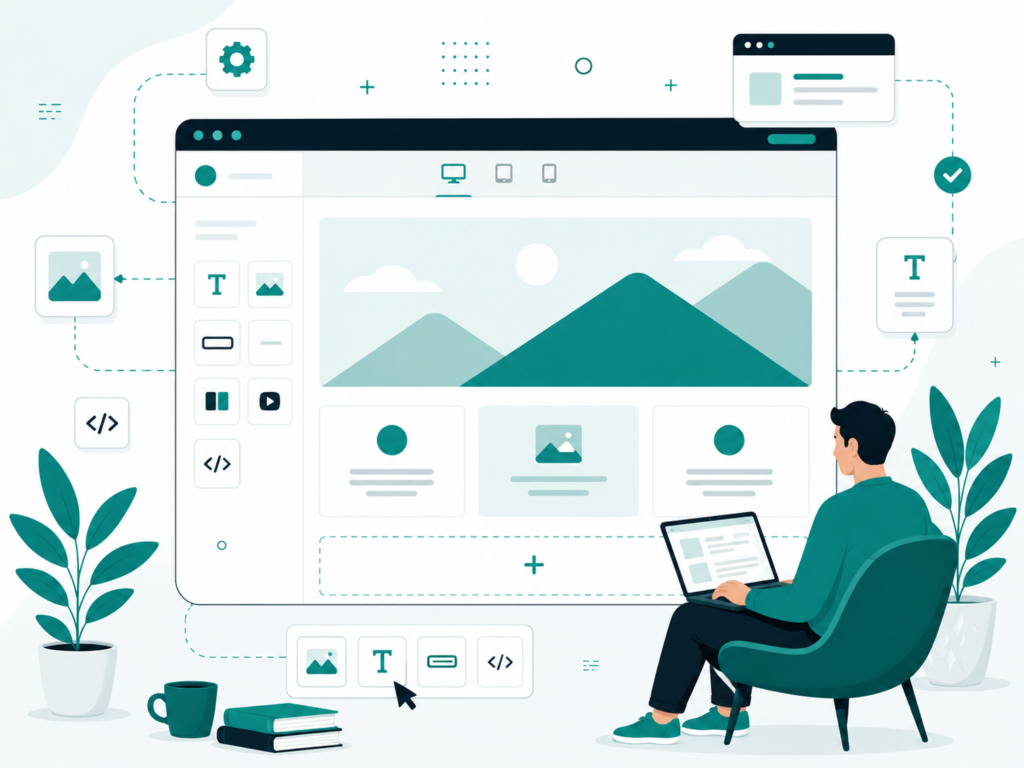
Macnaught Digital makes this point well (source: Macnaught Digital, How to Get Started in SEO), and I’ve seen it play out repeatedly with interns I’ve hired – a personal site, blog, or small ecommerce project gives you:
- A real platform to test and learn under actual conditions, not theory
- Proof to employers that you have genuine interest and initiative, not just a resume line
- Hands-on experience actually launching something, even through WordPress or no-code tools
And don’t just build it – rank it. Use free tools like KWFinder to target low-competition, relevant keywords, and show real results (source: Macnaught Digital). In a market flooded with applicants, that single move puts you ahead of most of the competition.
How Can Proactive Applications and Smart CVs Improve Your Chances in a Crowded Market?
Based on my own experience reviewing applications, here’s what actually works, and it lines up with what Macnaught recommends too (source: Macnaught Digital):
- Apply proactively to agencies and brands even when there’s no listed vacancy — larger agencies often need fresh SEO talent before they’ve even posted a job
- Keep your CV concise, and lead with side projects and concrete results (rankings, traffic, leads) – this often carries more weight than formal education
- Never, ever skip the cover letter. Use it to show who you are, what you’ve done to prepare (your site, your rankings, your self-learning), and why you specifically want the role
How Do Communities, Events, and Online Presence Accelerate SEO Careers?
The SEO industry runs on relationships more than most people realize. I didn’t fully understand this until I started attending events and engaging online myself. Macnaught points to free and low-cost meetups like BrightonSEO, MancSEO, Optimisey, SearchNorwich, CardiffSEO, and Women in Tech SEO as genuine career accelerators – not just networking fluff (source: Macnaught Digital).
Beyond events, being active online matters too. Engaging on platforms like Twitter/X, in communities like r/SEO_Digital_Marketing on Reddit, and joining professional groups like Exit Five keeps you close to real-world tactics instead of outdated theory (sources: Macnaught Digital, CXL, “Join a pro community”). And here’s the part people underestimate: a lot of hiring happens through word of mouth. Recruiters and managers regularly ask their own networks for recommendations before a job ever gets posted publicly. If you’d rather learn this through direct mentorship instead of trial and error, that’s exactly what I built SEO Academy for.
What Does a Modern SEO Career Roadmap Look Like in the AI and GEO Era?
If there’s one thing I wish someone had handed me on day one of my career, it’s a clear map of what the next 10 years could actually look like. So here it is – the roadmap I now use with my own team, built around CXL’s staged career framework (source: CXL SEO Career Guide).
How Do Career Stages in SEO Map From Entry-Level to Leadership?
| Stage | Role | Focus | Next Role |
|---|---|---|---|
| Stage 1 — Entry / Pivot | Marketing associate / junior digital marketer | On-page basics, keyword research, intro technical SEO | SEO Specialist / Junior SEO |
| Stage 2 — Mid-Career | Specialist → Manager | Audits, ROI reporting, campaign execution, team coordination | Senior SEO Manager / Organic Growth Strategist |
| Stage 3 — Advanced | Senior SEO Manager / SEO Lead | Cross-functional growth strategy, analytics, experimentation at scale | SEO Lead / Head of Organic Growth |
| Stage 3.5 — Future-Proof SEO | AEO & GEO specialization | AI-driven discovery, AI citation strategies | AI SEO Lead / AI Organic Growth Strategist |
| Stage 4 — Leadership | Head of SEO / Director of Organic Growth | Programmatic SEO, growth strategy, AI in B2B marketing at executive level | Director of Organic Growth / VP SEO / CMO |
What I appreciate about this framework and what I’ve genuinely watched play out with people I’ve worked alongside, including several in my own success stories is that Stage 3.5 didn’t exist five years ago. AEO and GEO specialization is a brand-new rung on the ladder, and it’s the one most SEOs haven’t climbed yet. That’s your opportunity if you’re early in your career.
Which Learning Paths and Micro-Credentials Support Each Career Stage?
| Stage | Recommended Learning Paths |
|---|---|
| Stage 1 |
|
| Stage 2 |
|
| Stage 3 |
|
| Stage 3.5 |
|
| Stage 4 |
|
I’d encourage anyone reading this to treat these as a checklist, not a wishlist. Pick your current stage, master the corresponding skills, and don’t jump ahead – I’ve seen too many people try to “skip” to AI SEO specialization without solid fundamentals, and it shows.
How Can SEOs Future-Proof Their Careers Against AI Disruption?
Here’s my honest, closing take after three-plus years in this industry: AI isn’t the threat people think it is – it’s a filter. It’s separating SEOs who only knew how to chase rankings from SEOs who understand strategy, business impact, and how search actually works underneath the surface.
What Do Salary Benchmarks Reveal About SEO and AI SEO Careers?
Pay climbs steadily from junior specialist through to executive-level organic growth leadership.
Based on CXL’s FAQ and the broader industry trend data (sources: CXL SEO Career Guide, Seoways: SEO Careers in Demand for 2025), here’s what future-proofing actually looks like in practice:
- Stay fluent in AI SEO (AEO/GEO) and entity-focused content – this isn’t optional anymore
- Build real cross-functional collaboration skills with content, product, and engineering teams
- Focus relentlessly on bottom-of-funnel impact and pipeline – not vanity metrics
- Use AI as a productivity multiplier for research, drafting, and data analysis, but keep human strategy at the center – don’t hand over the thinking, just the grunt work
Articles specifically covering “SEO careers against AI disruption” argue that the most in-demand titles in 2025–2026 are SEO Strategist, Technical SEO Engineer, Content Experience Specialist, and AI SEO Lead – roles that interpret AI-driven search updates, connect data to revenue, and design workflows where AI does the heavy lifting but humans set direction (sources: The Future of SEO Careers in an AI World, Webbb, Seoways: SEO Careers in Demand for 2025, CXL SEO Career Guide).
And one last thing I always tell people I mentor: the skills that make you great at SEO – content strategy, analytics, demand generation, growth marketing – are transferable well beyond SEO itself (source: CXL SEO Career Guide, FAQ). Even if your title changes down the road, this foundation opens doors into broader marketing leadership.
Frequently Asked Questions
Is SEO still a good career choice with AI taking over search?
Based on my own experience and the data, yes – SEO is still one of the most future-proof careers in digital marketing. AI hasn’t eliminated the need for visibility; it’s just expanded where that visibility needs to happen – from Google’s SERPs into AI Overviews, ChatGPT, Gemini, and Perplexity. Traditional SEO roles still pay well too, with clear progression from $97K at entry level up to $175K–$217K at the VP/CMO stage (source: CXL SEO Career Guide).
What's the difference between SEO, AEO, and GEO?
Traditional SEO focuses on ranking web pages in search results. AEO (Answer Engine Optimization) and GEO (Generative Engine Optimization) focus on getting your brand cited and recommended directly inside AI-generated answers (source: CXL SEO Career Guide). In my view, GEO isn’t a separate career – it’s a specialization layer that sits on top of solid SEO fundamentals. You can’t skip the base and jump straight to GEO.
Do I need a degree or certification to start a career in SEO?
No, and honestly, most experienced SEOs I know – myself included – didn’t come from a formal academic path (source: Macnaught Digital). What actually matters, based on what I’ve seen in hiring, is hands-on proof: a personal site you’ve built and ranked, measurable results, and a genuine understanding of how search works. My own beginner guide is a good next step from there.
How long does it take to become a Head of SEO or Director of Organic Growth?
Based on CXL’s career data, most people move from entry-level to a manager role within 2–4 years. Reaching leadership positions like Head of SEO, Director of Organic Growth, or VP with SEO ownership typically takes 6–10 years, but only for those who deliberately build cross-functional skills and can prove pipeline and revenue impact, not just rankings (source: CXL SEO Career Guide).
What skills should I focus on to future-proof my SEO career against AI disruption?
From my own work and the research, the priority list is: stay fluent in AI SEO (AEO/GEO) and entity-focused content, build real cross-functional collaboration with content and product teams, focus on bottom-of-funnel impact instead of vanity metrics, and use AI as a productivity tool for research and drafting, while keeping human strategy at the center (sources: CXL SEO Career Guide, Seoways: SEO Careers in Demand for 2025). The SEOs who blend both worlds are the ones who’ll keep climbing.
Conclusion
Here’s my honest, closing take after three-plus years of living through this shift firsthand: SEO isn’t dying – it’s maturing. What used to be a single-lane career chasing rankings has split into a much richer field, one that rewards people who understand both the technical fundamentals and the new AI-driven layer sitting on top of it.
The data backs this up at every level. Salaries are still strong and climbing predictably from junior to leadership roles (source: CXL SEO Career Guide). AI adoption, budget growth, and traffic shifts all point toward more demand for skilled SEOs, not less (sources: SEOprofy: AI SEO Statistics, EWR Digital: AI SEO Statistics) – brands need people who can make them visible inside AI Overviews and LLM answers just as much as they need people who can rank a page. And the entry path, while competitive, is more accessible than ever if you’re willing to build your own site, show real results, and show up in the right communities (source: Macnaught Digital).
If there’s one thing I want you to take away from everything I’ve shared here, it’s this: don’t treat AI as competition. Treat it as the newest skill layer in a career that’s always been about adapting to how people actually search. The SEOs who thrive over the next decade won’t be the ones who resisted that shift – they’ll be the ones who mastered it early.
That’s the path I’m building for myself, and it’s one I’d recommend to anyone serious about a long-term career in this space and if you want direct guidance on it, that’s exactly what SEO Academy and working with me are for.
Ready to Future-Proof Your SEO Career for the AI Era?
I mentor SEOs through the exact roadmap covered in this article - from foundational skills to AEO/GEO specialization. If you're serious about growing into a Head of SEO or AI Organic Growth role, let's talk.