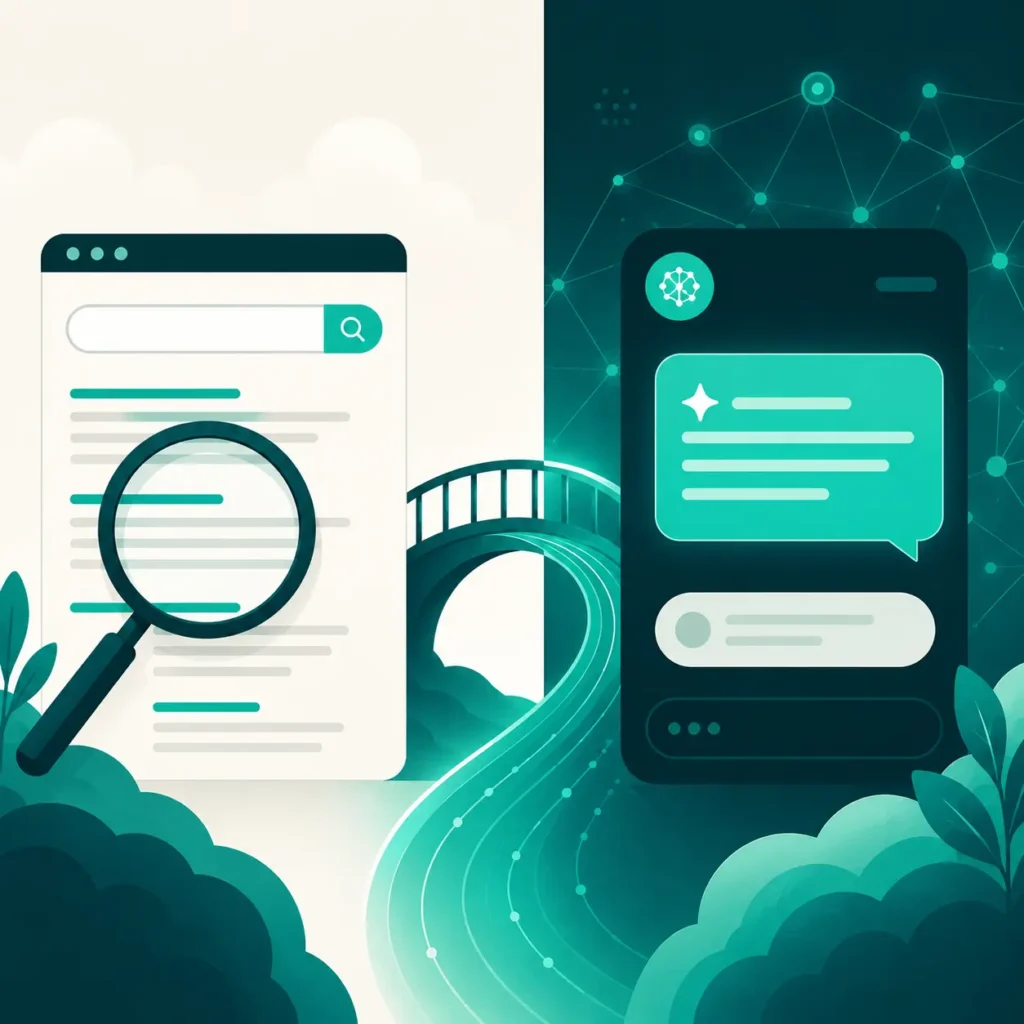
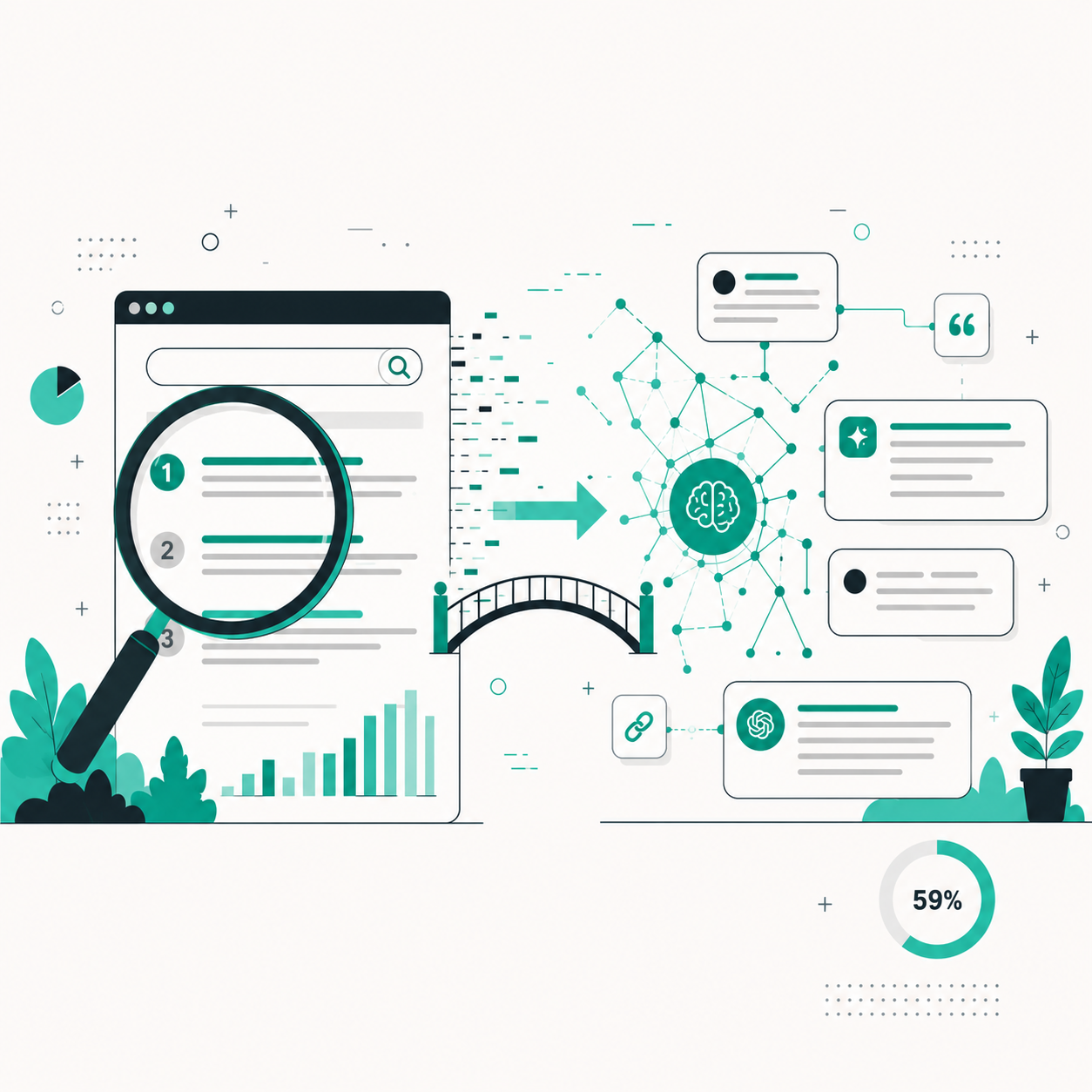
Here’s the direct answer: SEO isn’t dying in 2026, it’s splitting into two layers you now have to master together. Classic SEO gets your page ranked. AI SEO gets it cited inside AI Overviews, ChatGPT answers, and Perplexity summaries. Based on my 3+ years writing for SEO brands and running content for industry clients, the sites winning right now aren’t chasing rankings alone. They’re building content that both Google’s crawlers and AI models can trust, extract, and repeat. You can see how this plays out on real client work over on my case studies page.
This guide is your beginner map through both layers, and I’ve backed every claim in it with real stats, case studies, and expert commentary from a week of dedicated research on this exact topic.
What SEO and AI SEO Actually Mean in 2026
SEO is still what it’s always been, helping search engines understand, index, and rank your content. Google’s starter guide hasn’t changed that core idea: make pages discoverable, useful, and technically accessible. AI SEO is the newer layer sitting on top of it making content useful to AI systems that summarize, cite, and recommend it, not just rank it. In my experience, this is the part most beginners skip, then wonder why they never show up in AI Overviews.
Search engines still lean on crawlability, structure, intent match, and content quality. AI systems, on the other hand, look for clear answers, structured information, and trustworthy citations. Search Engine Land’s 2026 analysis makes a sharp point here: technical SEO is actually getting easier by default, but decisions around bot access, structured data, and llms.txt now matter more than they used to.
SEO still matters because AI systems need source pages to extract from in the first place – no source, no citation. Traditional SEO chases rankings and clicks; AI SEO chases citation-worthiness and topical authority. The simplest way I explain it to clients: classic SEO helps people find your page, AI SEO helps machines trust and reuse it. The concepts worth learning first are visibility, topical authority, brand citations, helpful content, entity clarity, structured data, and E-E-A-T – themes that run through both Search Engine Journal’s 2026 trend coverage and HubSpot’s search evolution report.
The Shift Toward Zero-Click and AI Overviews
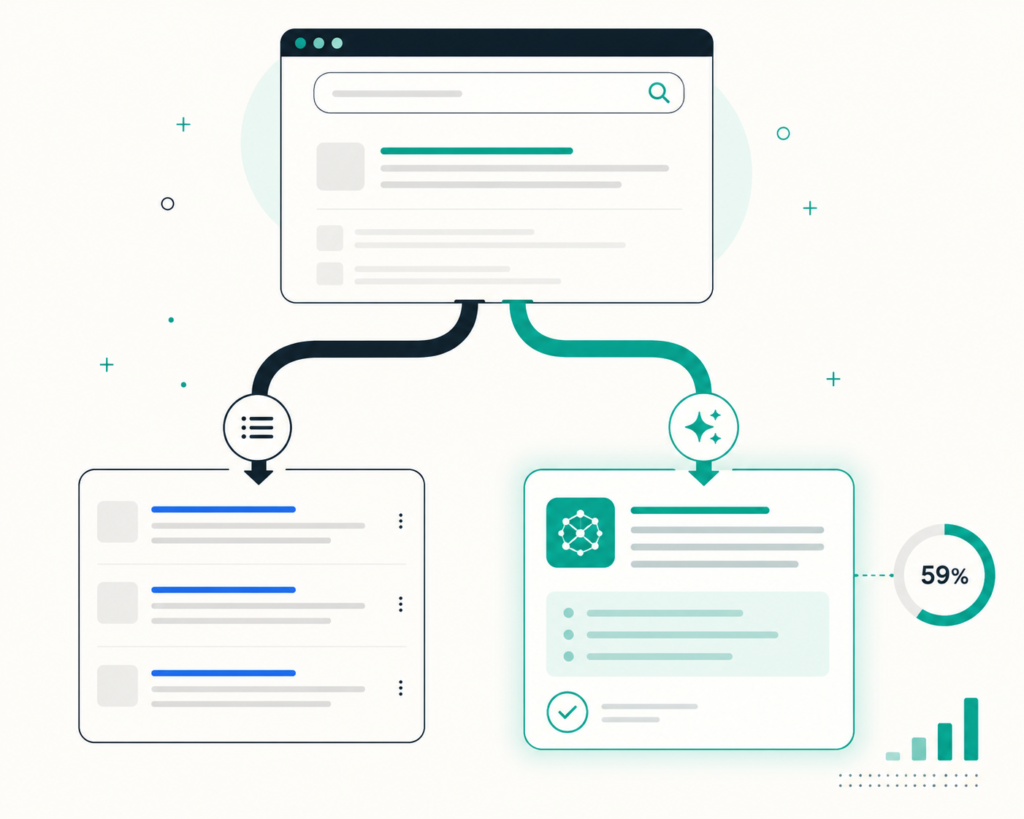
The click is no longer the only prize. A 2026 industry analysis on LinkedIn claims AI search now handles around 59% of informational queries before users ever click a link – meaning being cited is almost as valuable as being clicked. The biggest trends this year, according to Search Engine Journal and HubSpot, are AI Overviews, zero-click search, answer engine optimization, tighter E-E-A-T expectations, and growing importance of video and multi-platform presence.
Because filtering systems are getting sharper, AI-generated pages with no original insight are easier than ever to ignore, which is exactly why Search Engine Land argues SEO is becoming more demanding, not less. Industry leaders increasingly argue that brand mentions and citation-readiness matter more than exact-match keywords, favoring multi-source trust and semantic breadth over backlink count alone.
2026 SEO Trend Table
| Trend | What It Means | Beginner Action |
|---|---|---|
| AI Overviews | AI summaries now appear above traditional results | Structure content with direct, quotable answers up top |
| Zero-click search | ~59% of informational queries answered before a click | Optimize for citation, not just clicks |
| Structured data | Schema helps AI understand entities and context | Add FAQ, article, and organization schema early |
Where Moz, Ahrefs, and Google Fall Short on AI SEO
Google, Moz, and Ahrefs all agree on the core basics: crawlability, content quality, keyword relevance, page structure, internal links, and technical accessibility. Moz and Ahrefs use a pillar-style structure – keywords, content, links, technical SEO, measurement – that mirrors how SEO is actually organized, giving beginners a learning sequence instead of scattered tips.
Where they fall short is AI visibility. None of them fully teaches how to win across AI systems, social platforms, and search engines simultaneously – that’s the gap this guide, and my own client work, tries to fill.
Moz vs. Ahrefs vs. Google vs. AI SEO Guides
| Source | Focus | Strengths | What's Missing |
|---|---|---|---|
| Google Starter Guide | Discoverability & technical basics | Clear, authoritative | Minimal AI visibility guidance |
| Moz | Structured SEO education | Chapter-based learning | Limited AI Overview/citation strategy |
| Ahrefs | Data-driven tactics | Deep technical/competitor analysis | AI SEO treated as afterthought |
| AI SEO Guides (2026) | Citation & answer-engine visibility | Covers AI Overviews, structured data | Often lighter on SEO fundamentals |
Smarter Keywords for SEO + AI SEO
Moz, Ahrefs, and Google rank because title, structure, and internal links all reinforce the same topic, matching exact phrasing like “beginner’s guide to SEO” and “SEO basics.” Newer players, referenced in roundups like the Competitive Intelligence Alliance’s SEO analysis and HubSpot’s competitor analysis guide are leaning into phrases like “AI for SEO” and “beginner’s guide to SEO in the AI era,” capturing newer intent with far less competition.
Your best opportunity is blending both worlds: “beginner guide to SEO and AI SEO,” “SEO for beginners in the AI era.” And local phrases like “SEO for Pakistani small businesses” or “Lahore small business SEO” cut competition and add a practical angle global guides miss, something I apply directly in the Academy curriculum I teach interns.
Your Step-by-Step Roadmap
Don’t try to do everything on day one. My 7-step sequence for beginners: understand search intent, choose keywords, create genuinely helpful content, optimize on-page elements, add schema, earn authority, then track results. Use AI for ideation, outlines, and cleanup – but keep final judgment human. Case studies consistently show AI works best paired with human strategy, and falls apart when left unsupervised to publish generic pages on its own.
In your first 30 days, focus on one cornerstone article, fixing your site’s basics, building internal links, and validating one keyword cluster. Experts increasingly recommend building topic authority and AI visibility in parallel, every page should answer a specific question and connect to your other content.
SEO Fundamentals You Need Before AI
Keywords tell you what people search for, intent tells you why, and topic clusters help you cover a subject comprehensively. On-page structure matters just as much: one clear H1, question-based H2s where it helps, answer-focused sections, and clean internal linking – this helps both human skimmers and AI extraction.
Technical SEO still matters because crawlers need to access and trust your content before anything else works (Search Engine Land, 2026). And for trust and E-E-A-T, publish clear authorship, cite real evidence, and use actual examples — not hypotheticals. This is the most underrated ranking factor I see beginners skip.
Classic SEO Basics Checklist
| Element | Purpose | Beginner Action |
|---|---|---|
| Search intent | Matches content to user need | Identify before writing |
| Keyword research | Confirms real demand | Validate with real tools |
| On-page structure | Skimmable for humans & machines | Question-based H2s |
| Internal linking | Builds topic clusters | Link 2-3 related pages |
| Technical SEO | Crawler access & trust | Check crawlability/speed |
| E-E-A-T | Builds reader/system trust | Real authorship, examples |
Using AI for Research Without Losing the Plot
AI should help you think faster, not think less. It’s genuinely useful for content angles, keyword variations, FAQ ideas, and outlines, but always validate AI-suggested keywords with real tools, since AI can confidently propose topics with zero real demand. One 2026 analysis, cited via Stackmatix’s AI SEO case study roundup, reported
"Average gains of 45% organic traffic and 38% e-commerce conversion lift when AI was used strategically rather than randomly"
The winning workflow industry leaders actually use: AI clusters topics and drafts outlines, humans edit and fact-check before anything ships.
Creating AI Content Without the Common Pitfalls
Use AI to generate the skeleton, then add your own examples, data, and practical advice on top. AI systems and snippets consistently favor direct-answer formatting, schema, and concise sections for extractability, per Stackmatix’s research. The recurring pitfalls I see in AI-assisted content: generic writing, weak evidence, no schema, and no clear point of view.
Real AI SEO Case Studies: The Proof
This is the section that actually convinces skeptical clients – it’s evidence, not theory.
The Numbers Behind Real Campaigns
One reported B2B property management case study showed 429% traffic growth, $5.9M in revenue, 138 AI citations, and a 6,864% ROI, tied directly to a real sales funnel (RankMax). A separate Dubai-based campaign reported 1,441% organic traffic growth and 420% more leads through AI-powered SEO automation combined with human strategy (AI SEO Services Dubai case study).
WordLi’s case studies show similar patterns across very different industries – 4.4x more clicks for Bennett Legal, 147% click growth for L’Oréal Turkey, and 125% click growth for a dental clinic. The lesson isn’t content volume; it’s relevance, structure, trust, and citation-worthiness working together. I break down similar results from my own client work on the Raxivo Digital case studies page.
AI SEO Case Study Comparison
| Industry | Result | Tactic | Source |
|---|---|---|---|
| B2B Property Management | 429% traffic, $5.9M revenue, 6,864% ROI, 138 AI citations | AI SEO tied to sales funnel | RankMax |
| Dubai AI SEO Campaign | 1,441% traffic growth, 420% more leads | AI automation + human strategy | Case Study PDF |
| Bennett Legal | 4.4x more clicks | Semantic SEO, knowledge graph | WordLi |
| L'Oréal Turkey | 147% click growth | AI-friendly content structure | WordLi |
| Dental Clinic (Local) | 125% click growth | Local semantic optimization | WordLi |
Making Your Content Citation-Worthy
If you want AI systems to quote your content, the page has to be easy to understand, trust, and parse, that’s where schema, structured data, and semantic clarity come in. Structured data helps machines understand entities, FAQs, authorship, and relationships, and comprehensive JSON-LD is a repeated pattern behind every successful campaign referenced above.
Start simple: article schema, FAQ schema, organization schema, and breadcrumbs. That’s genuinely enough for most beginner blogs to start communicating context clearly. It won’t guarantee rankings on its own, but it sharply increases the odds your content is summarized correctly and cited accurately.
Building Authority Beyond Your Website
AI systems often rely on signals from multiple places, not just one webpage, the more consistently your brand shows up across YouTube, LinkedIn, and community platforms, the easier it is for these systems to trust and cite you. Successful campaigns build authority by publishing supporting content across blog posts, videos, and social posts, all built around the same core topic. Publish original examples, join real niche discussions, and create content other creators actually want to reference. Backlinks still matter — but in 2026 they sit alongside citation potential and brand presence, not as the whole strat
Backlinks vs. Brand Citations vs. AI Citations
| Signal | What It Proves | How to Earn It |
|---|---|---|
| Backlinks | Others trust your content | Original research, outreach |
| Brand Citations | Recognized credible name | Consistent multi-platform presence |
| AI Citations | AI trusts content enough to quote | Clear structure, schema, direct answers |
Balancing Classic SEO and AI Daily
Classic SEO – keyword research, on-page optimization, internal links, backlinks – stays your base. AI SEO adds prompt-driven ideation, semantic clustering, and citation readiness on top of it. The evidence consistently favors human strategy with AI support over AI-first publishing. Never publish anything that lacks firsthand examples, accurate claims, or a clear sense of who it’s actually for.
Applying This as a Small Business or Freelancer
Most large SEO guides simply aren’t written for local businesses or solo operators with limited budgets, weak domain authority, and no spare time for technical SEO. Small businesses can compete by targeting long-tail local keywords and location-specific examples instead of chasing broad global terms too early. The WordLi case studies above prove the underlying principles – structure, trust, direct answers, scale down to a five-page local site just as well as a national brand.
Freelancers can turn this entire framework into a service offering, keyword research, outlines, AI-assisted drafts, schema setup, and reporting, a model I teach directly inside my SEO Internship program.
Measuring What Actually Matters
Success in 2026 has to be tracked on two fronts. Classic metrics – organic traffic, rankings, CTR, conversions, engagement – remain the baseline. The newer layer is AI visibility: AI citations, AI Overview appearances, brand mentions, and presence across answer surfaces. The case studies above – 45% traffic growth, 38% conversion growth, 6,864% ROI – prove this isn’t theoretical. A beginner dashboard should stay narrow: one page cluster, one keyword set, organic clicks, conversions, and AI mention visibility over time.
Your Final Action Checklist
Start with one article, one topic cluster, one clear search intent, then layer in AI support. Avoid generic AI content, weak sourcing, and publishing without structure. Think like a publisher, not just a keyword optimizer, the goal is content humans want to read and machines want to cite. In my 3+ years doing this work, that’s the one principle that hasn’t changed, and I don’t expect it to.
Final Beginner Action Checklist
| 1 | Pick one topic cluster and clear search intent |
| 2 | Validate keywords with real data, not AI guesses |
| 3 | Draft with AI, add original evidence yourself |
| 4 | Structure with direct-answer headings, add schema |
| 5 | Publish across an additional platform for authority |
| 6 | Track classic metrics AND AI visibility signals |
| 7 | Iterate based on real performance |
Want to see this framework applied to real client sites? Check out the case studies at Raxivo Digital, or learn the full system hands-on through the SEO Internship program.
FAQs
What's the difference between SEO and AI SEO?
Classic SEO focuses on rankings, clicks, and organic traffic. AI SEO focuses on citation-worthiness, answer clarity, and topical authority so AI systems like AI Overviews and ChatGPT can trust and reuse your content. Think of it this way: SEO helps people find your page, AI SEO helps machines trust and quote it.
Is SEO still worth learning in 2026 with AI Overviews taking over search?
Yes. AI systems still need source pages to pull answers from – no source, no citation. A 2026 industry analysis found AI search now handles around 59% of informational queries before a click happens, which makes being cited by AI almost as valuable as ranking traditionally.
Can beginners really use AI tools for SEO without hurting their content quality?
Yes, if AI is used correctly. AI works best for outlines, keyword variations, and content structure – not as a replacement for original insight and fact-checking. Case studies show average gains of 45% organic traffic and 38% conversion lift when AI is used strategically alongside human review, not left to publish unsupervised.
What should a complete beginner learn first before touching AI SEO tools?
Start with the fundamentals: search intent, keyword research, on-page structure, internal linking, and technical SEO basics. These are the backbone every ranking guide and every successful case study is built on. AI should be layered in after you understand these, not before.
What's the easiest way to start making my content "AI citation-worthy"?
Begin with basic schema markup article schema, FAQ schema, organization schema, and breadcrumbs. Combine that with clear, direct-answer formatting near the top of each section. This alone significantly increases the odds AI systems summarize and cite your content accurately.
Conclusion: SEO Isn't Dying - It's Growing a Second Layer
Here’s where I land after pulling all this research together:
SEO in 2026 isn’t a smaller game – it’s a bigger one. The fundamentals I built my first few years of experience on – search intent, keyword research, on-page structure, technical health, real authorship, haven’t gone anywhere. They’re still the foundation everything else sits on. What’s changed is that a second layer now sits on top of it, and ignoring that layer is what separates the sites still growing from the ones quietly losing visibility without realizing why.
The numbers throughout this guide make the case better than I ever could in theory alone, 59% of informational queries answered before a click, 429% traffic growth tied to a real sales funnel, 45% average organic gains when AI is used strategically instead of blindly. None of that happened by accident. Every one of those results came from the same pattern: strong fundamentals, structured for both humans and machines, backed by real evidence and real judgment – not AI left to run unsupervised.
Stop asking whether to focus on SEO or AI SEO. Start asking how to build content that earns both a ranking and a citation at the same time. That’s the actual skill worth developing in 2026, and it’s the same one I apply across every client project I run.
If you want to see this framework applied to real sites rather than just read about it, my case studies page walks through actual results. And if you’d rather learn to do this hands-on, that’s exactly what I built the SEO Internship program for – turning everything in this guide into practiced, repeatable skill instead of just another article you read once and forget.